

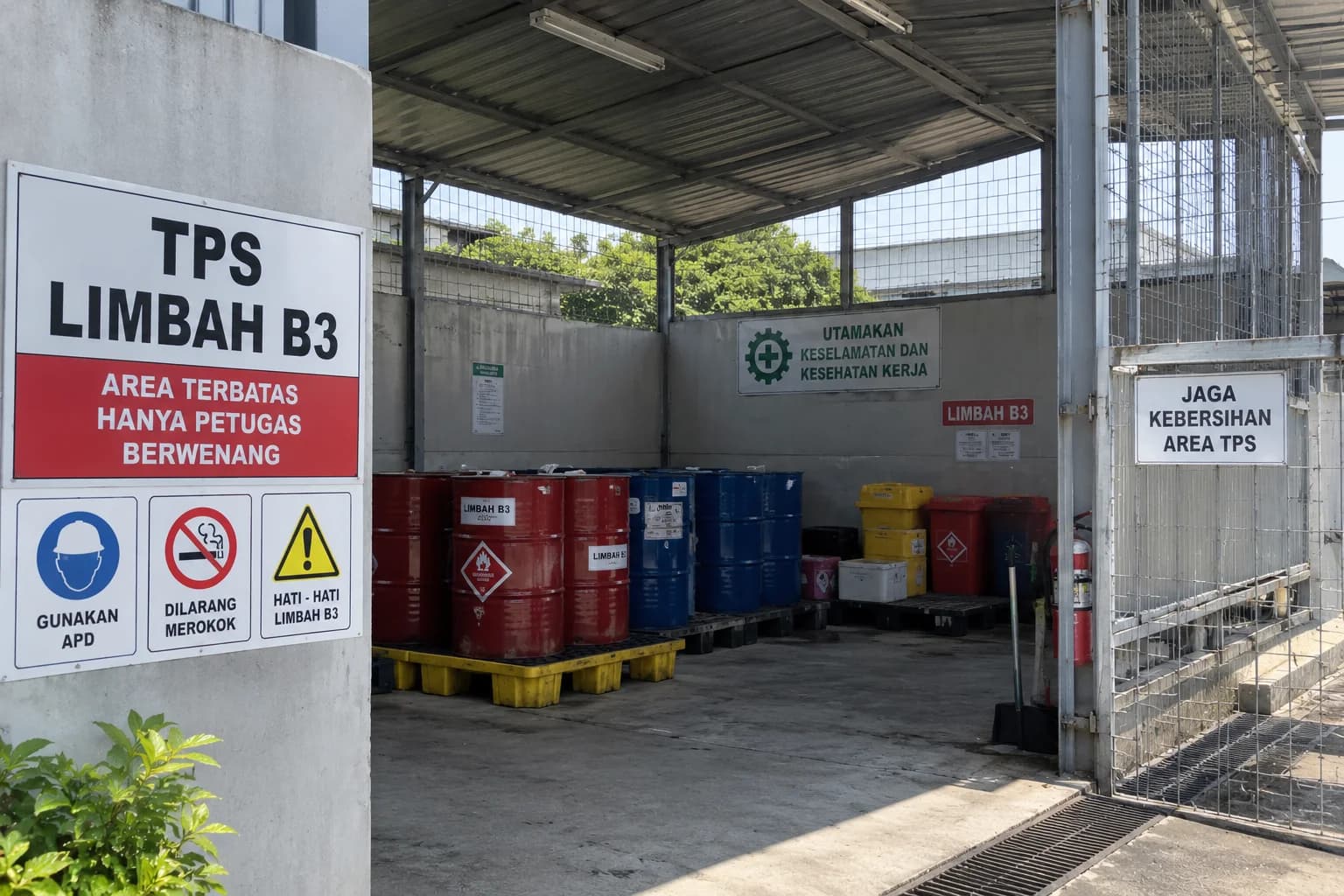
There is a recurring pattern during hazardous waste inspections: the storage building is good, the floor is impermeable, the roof is there, the symbols are complete. Then the inspector opens the logbook, and the pages have been blank for six months.
With hazardous waste storage, building it is the easy part. Operating it consistently is the hard part.
Eight things that get checked
1. Building construction
An impermeable floor, level, uncracked, and free of undulation. Even a small crack becomes a finding, because it means a spill could reach the ground.
A roof protecting against rain and direct sunlight. Ventilation sufficient to prevent vapour accumulation.
2. Spill containment
A bund or sump able to contain a leaking container. Its capacity must be proportionate to the quantity stored, not merely present.
3. Symbols and labels
Symbols matching waste characteristics on the building and on each container. Labels stating the waste type and the date storage began.
That date matters; it is not decoration. It is what storage duration is calculated from, and a container without one immediately raises a question.
4. Separation between types
Wastes whose characteristics must not mix have to be physically separated. Stacking every drum into a single block because space is tight is a frequent finding.
5. Emergency equipment
Fire extinguishers still within their service date, spill handling equipment, personal protective equipment, and emergency procedures posted and legible.
6. Restricted access
Storage must be locked and accessible only to authorised personnel. A store whose door is always open because locking it is inconvenient is a finding.
7. Movement records
This is the one most often blank. Every waste movement in and out is recorded: type, quantity, date, and destination.
These records are not for the inspector but for you. Without them, a hazardous waste balance cannot be prepared correctly.
8. Storage duration
Hazardous waste may not be stored beyond the prescribed limit. Limits differ by waste characteristics and quantities generated, and infectious waste carries a much shorter limit.
Exceeding the limit is a violation in itself, regardless of whether the waste is eventually transferred correctly.
The most common failures, and why they happen
Records not maintained. Almost always because nobody is specifically responsible. Assigning it to “general affairs” means nobody feels assigned.
Exceeding duration while waiting for a full load. The economic logic is understandable: wait until a full truckload accumulates so transport is efficient. But storage limits do not wait for volume. The solution is agreeing a periodic collection schedule with the transporter from the outset.
Third-party licences expired. The arrangement has run for years, the transporter's licence lapsed midway, and nobody checked. Transferring to a party without a valid licence is treated as an invalid transfer, and responsibility returns to you.
Manifests incomplete or not retained. A manifest is your evidence that the waste reached the right place. Without copies, you formally cannot demonstrate anything.
Waste not recognised as hazardous. Used toner, empty chemical containers, oil filters, fluorescent tubes, batteries. Many are discarded with general refuse because they do not look dangerous.
An unbalanced record. Quantities generated, stored, and transferred do not reconcile. An unexplained gap points to a conclusion you do not want to face.
Making it run by itself
What separates companies whose storage is always in order is not a bigger budget but a few simple habits:
One named person responsible, not a department.
A logbook or digital record completed at every movement, not summarised at month end.
A periodic collection schedule agreed with the transporter, rather than waiting for the store to fill.
Calendar reminders for third-party licence expiry, with checks before they lapse.
A monthly self-inspection against the eight points above.
That monthly self-inspection takes fifteen minutes and resolves most problems before they become findings.
If your storage is not yet compliant
Most non-compliances can be corrected at modest cost: patching the floor, installing a bund, producing symbols and labels, setting up a logbook, fitting a lock.
What cannot be corrected overnight is an empty record history. The sooner it starts, the better.
If you want to confirm whether the storage at your site meets requirements, send photographs of its condition on WhatsApp along with the list of waste types stored. Photographs alone usually reveal what needs attention first.