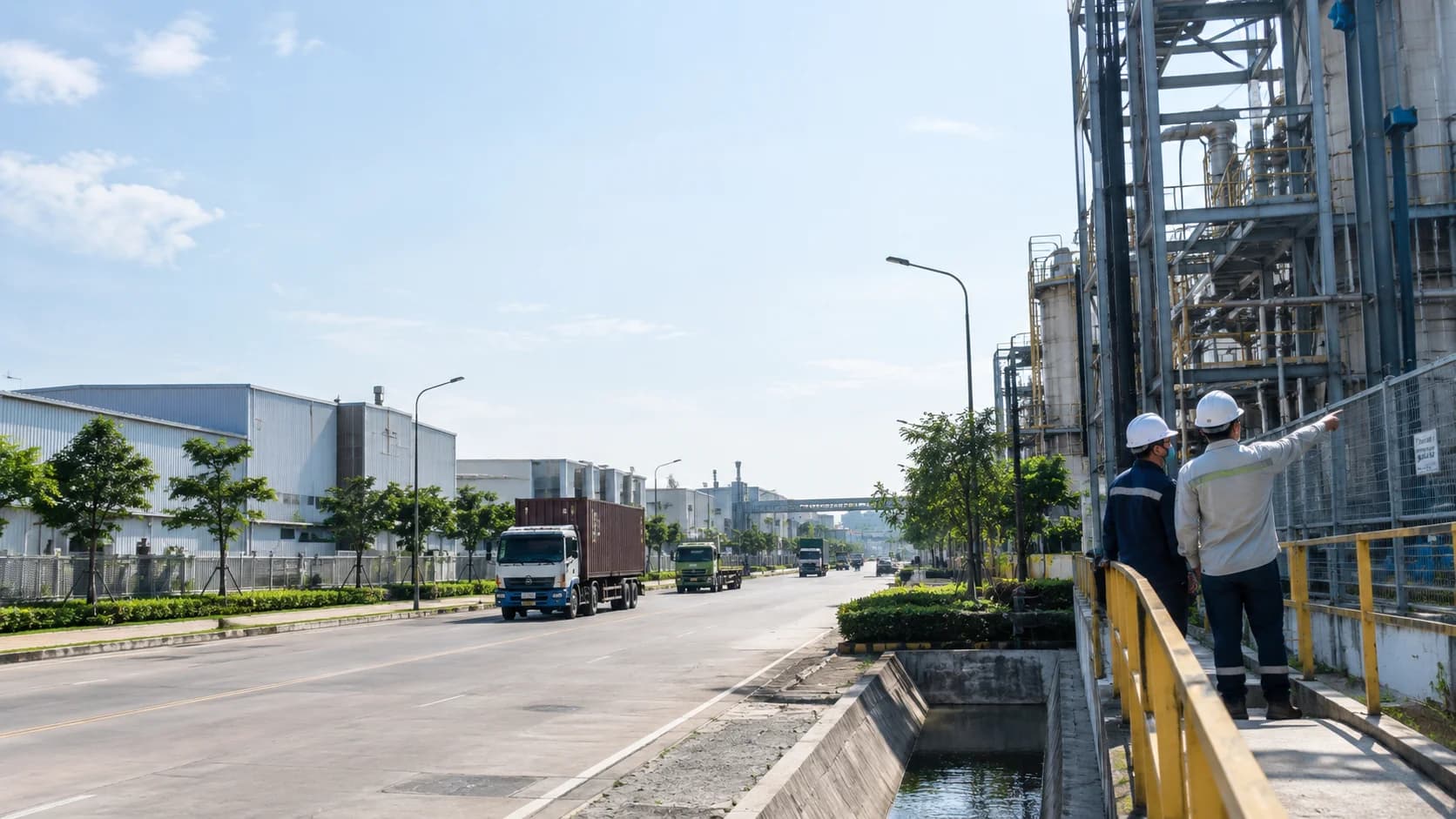

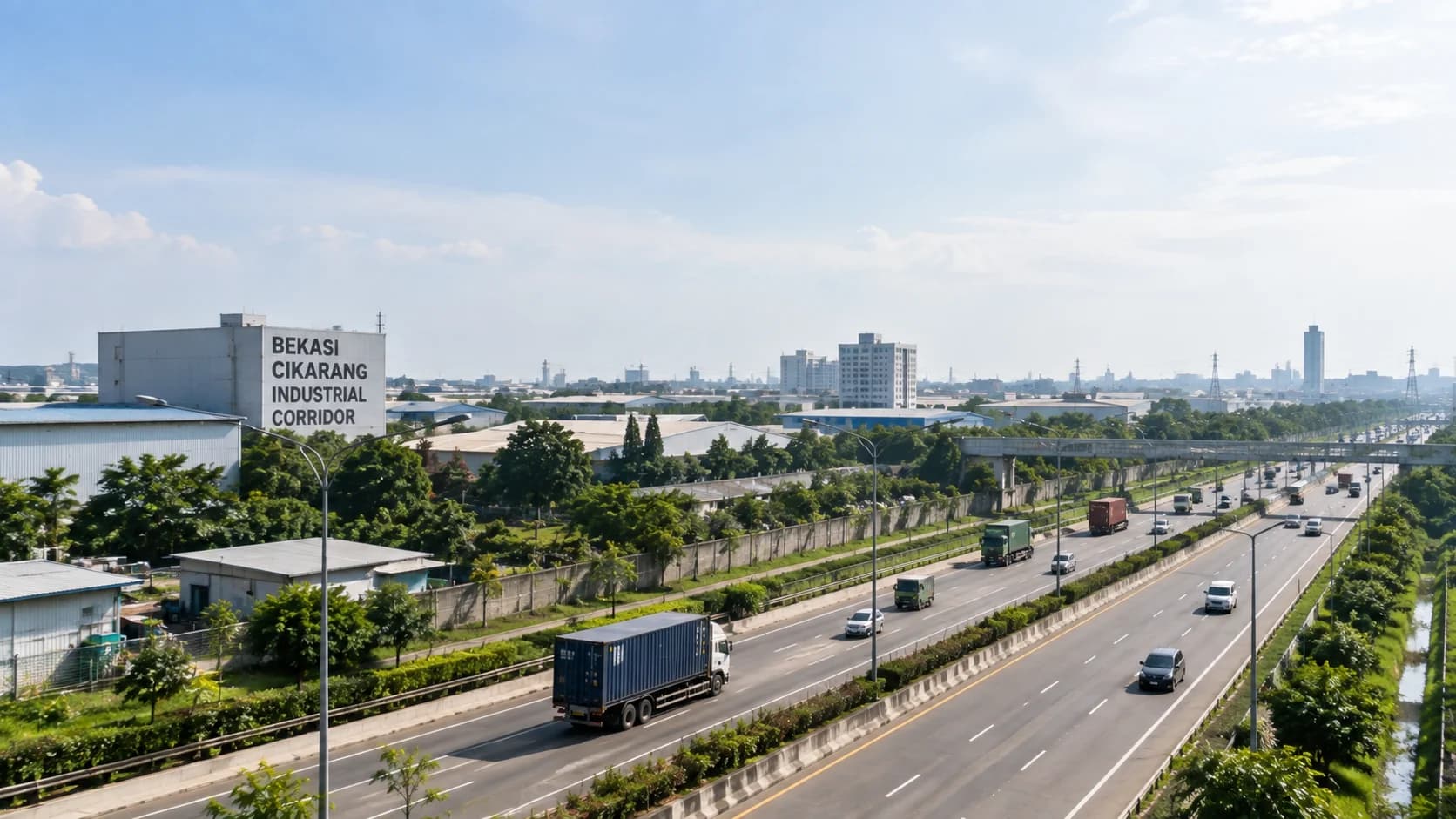
The corridor running from Bekasi to Cikarang is one of the densest industrial concentrations in Indonesia. Factories, warehouses, industrial estates, and housing all grow alongside each other in the same space.
That density gives environmental licensing here several characteristics not always found elsewhere.
First question: which authority
This confuses newcomers more than anything else, and getting it wrong means your file enters the wrong door.
The territory itself is divided. Bekasi City and Bekasi Regency are two separate autonomous regions with their own environmental agencies. Cikarang sits within Bekasi Regency.
Beyond that territorial division, jurisdiction over document assessment also depends on the scale and distribution of impact. Activities whose impacts cross regency or city boundaries are handled at provincial level, and those crossing provinces or falling under specific mandates are handled centrally.
Establishing this at the outset saves considerable time. A file submitted to an agency without jurisdiction is not rejected quickly; it simply sits.
What is distinctive about this area
Many activities sit inside industrial estates
This is the biggest differentiator. A company located inside an industrial estate that already holds its own environmental document faces a different process from one standing alone outside an estate.
Part of the assessment is already covered by the estate document, and for some activities a lighter mechanism exists in the form of a detailed management and monitoring plan. What must not be assumed is that all environmental matters are handled by the estate operator. Responsibility for your own activity remains yours.
Points to confirm with the estate operator at the outset: how wastewater is managed, whether there is a central treatment plant and what the discharge provisions are, and what reporting mechanism applies to tenants.
Water is a serious concern
This region faces pressure on water resources, both in groundwater abstraction and in the capacity of receiving water bodies.
Consequently, water-related assessments tend to be scrutinised more closely, and plans for large-scale groundwater abstraction face tighter consideration.
Inundation and drainage
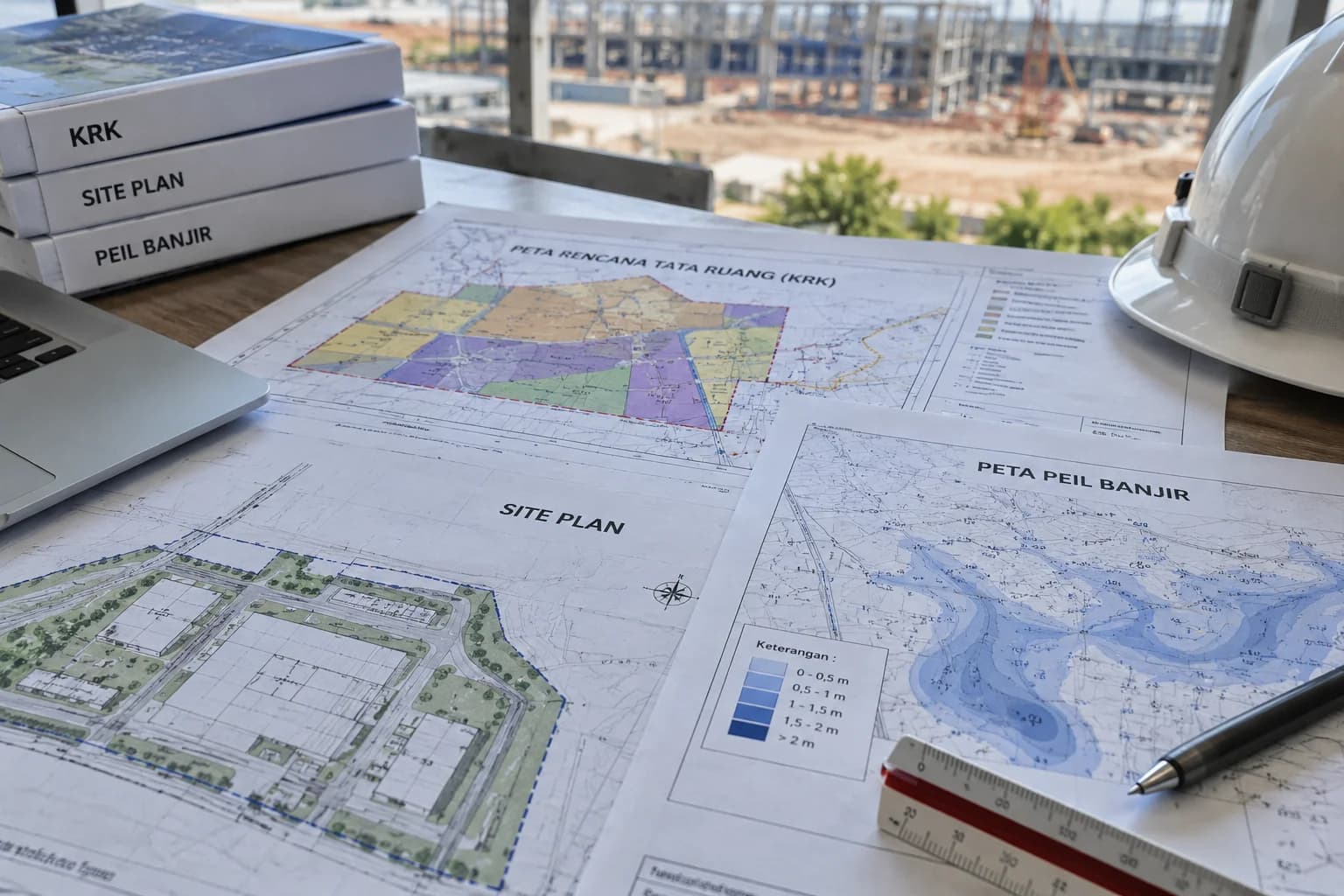
Parts of this area have a history of inundation. A flood level certificate is therefore not a formality, and runoff management plans are genuinely examined within environmental documents.
Settlement density around industrial areas
Many industrial sites here directly adjoin settlements that grew up later. This makes noise, odour, dust, and truck traffic real issues rather than merely assessment topics.
For activities adjoining settlements, the quality of community relations often determines how smoothly the process runs more than the completeness of the documents themselves.
Realistic timelines
As planning benchmarks, not promises:
| Document | Estimated time |
|---|---|
| SPPL | A matter of days |
| UKL-UPL | 1–3 months |
| AMDAL | 8–12 months |
| Wastewater or emissions technical approval | 2–4 months to issuance |
| Traffic impact analysis | 1–3 months |
These assume complete data from the proponent and a finalised design. In practice, the most frequent cause of delay comes from the proponent's side rather than the agency's.
The general sequence
Confirm conformity of spatial use and obtain the planning certificate.
Apply for the flood level certificate, particularly on large sites.
Run the screening through Amdalnet.
Prepare the environmental document alongside technical approvals, in parallel.
Run the traffic analysis concurrently where your activity is subject to it.
Building approval, construction, then functional certification.
If you are new to this area
Three things are most useful to confirm before settling on a site: whether the designated land use matches your intended activity, whether the site sits inside or outside an industrial estate, and whether the area has a history of inundation.
All three can be checked before any commitment, and all three most often determine how smoothly everything that follows will run.
We are based in this region and handle environmental licensing across the Bekasi and Cikarang corridor. If you are weighing up a location, or already hold land and want to know what needs arranging, send the location and intended activity on WhatsApp. The initial check costs nothing.