
One misunderstanding recurs constantly: assuming that an Environmental Approval already covers permission to discharge wastewater.
It does not. These are separate documents with separate functions. The Environmental Approval states that your activity is environmentally acceptable. The technical approval for wastewater quality standards states that your treatment plant design is genuinely capable of producing a discharge that meets those standards.
And once the plant is built, one more document follows: the operational feasibility certificate, confirming that the installation actually performs as designed.
Who is required to have one
Put simply: activities required to hold an AMDAL or UKL-UPL and which discharge wastewater to the environment must hold a technical approval and an operational certificate.
Some clarification, because this is a frequent source of confusion:
Domestic wastewater only, from toilets and kitchens, in limited volume and treated by a standard septic system, generally does not require its own technical approval.
Process wastewater discharged to a river, a drain, or into the ground requires one.
Wastewater handed to a licensed third party is treated differently, but recording and reporting obligations remain.
Industrial estates with a central treatment plant change the picture. Tenants discharging into the estate plant usually follow the estate operator's provisions rather than obtaining their own approval. But this must be confirmed, never assumed.
What to prepare
The essence of a technical approval is demonstrating that your design is technically sound. The documents requested are therefore technical rather than administrative:
Water balance. How much water enters, where it is used, how much leaves as wastewater. The figures must be consistent and defensible.
Wastewater characteristics. Which parameters are present and at what concentrations, before treatment.
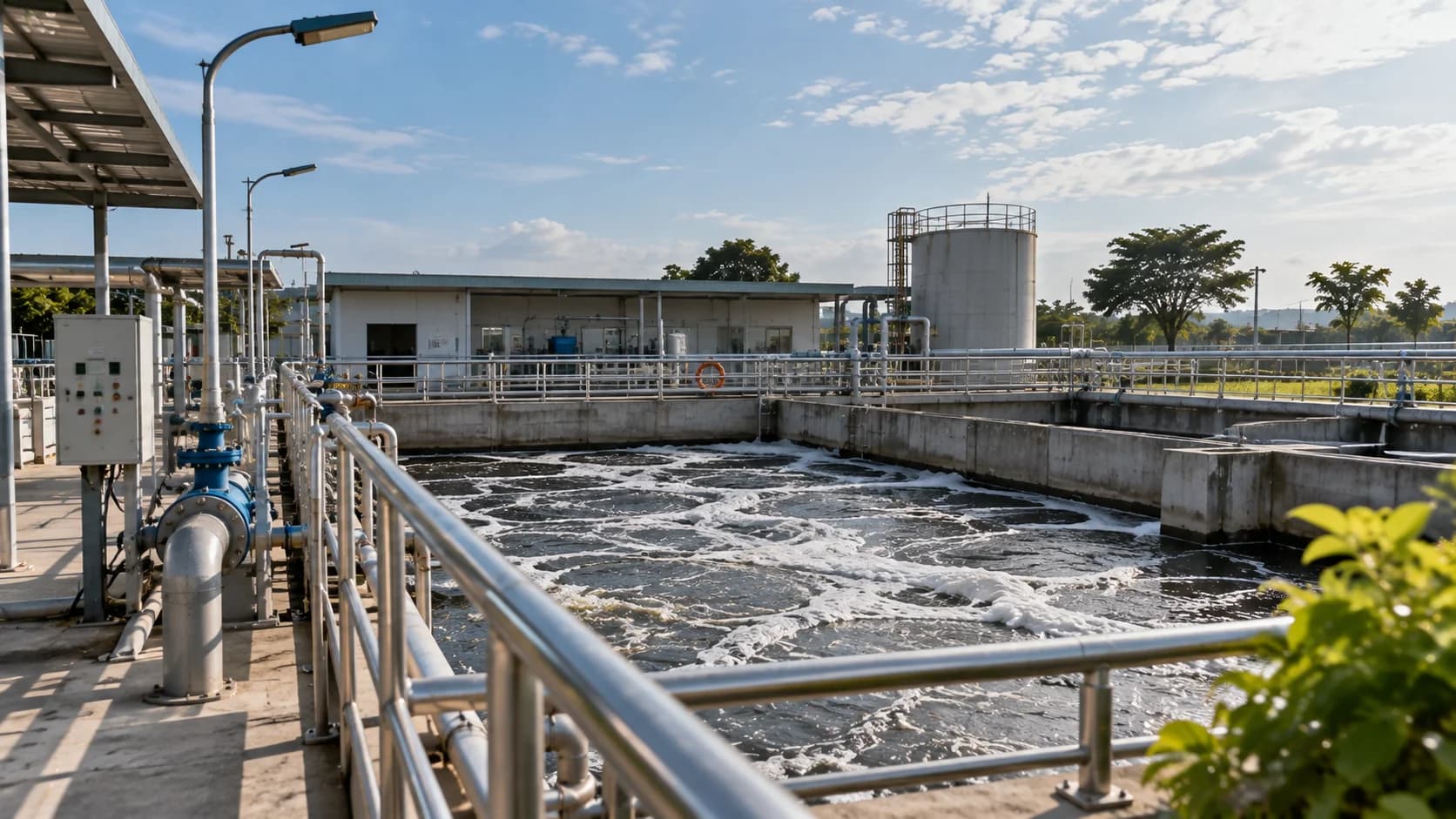
Treatment plant design. Process flow diagram, dimensions of each unit, retention times, and the basis of calculation. This is the section most often returned, because the calculations do not reconcile with the claimed flow rate.
Compliance and monitoring points. Their precise locations, with coordinates.
Applicable quality standards. Based on your type of activity and on the assimilative capacity of the receiving water body.
Monitoring plan. Frequency, parameters, and the laboratory to be used.
Emergency response procedures. What happens if the plant fails.
The route to issuance
Broadly: prepare the technical study, submit through the system, technical team assessment, revisions where noted, then issuance of the technical approval.
Once issued, the plant is built according to the approved design. Testing then demonstrates that the results meet quality standards, and from there the operational certificate is applied for.
Since Government Regulation 28 of 2025, the technical approval can be filed in parallel with the Environmental Approval. That is meaningful time saved, but it demands one thing: the figures in both documents must match. Production capacity, wastewater flow, and process type stated in the environmental document must be identical to those used in the technical calculations. Any discrepancy will be caught and both will be returned.
Four errors that most often send files back
Design flow rate inconsistent with the water balance. The plant is sized for one flow while the water balance shows another. The technical team will find this.
Incomplete parameter coverage. The parameter list follows the type of activity, not the preparer's preference. Omitting a difficult parameter does not remove it from your obligations.
Compliance point unclear or inaccessible. The compliance point must be samplable at any time by an inspector. A point hidden inside the installation or hard to reach will be challenged.
Unsuitable receiving water body. Discharging into a channel that is not in fact a water body, or into one whose assimilative capacity is already exceeded, requires a different approach from the outset.
Work does not end when the certificate is issued
The operational certificate is not a document to file away. Obligations attach to it: periodic monitoring at the prescribed frequency, daily flow recording, and periodic reporting.
This is the most frequent finding during supervision. The plant exists, works well, but the monitoring records are blank for months. Formally that is a violation, regardless of the fact that the discharge meets the standards.
If the plant has already been built
Ideally the technical approval is issued before construction, because the approved design is what gets built. Where the plant already exists, the process becomes one of aligning the document with actual conditions, and that demands technical honesty.
If the existing plant's performance does not meet the standards, the way out is not to adjust figures in the document but to prepare a realistic remediation plan. The test data will speak for itself in due course.
If you are designing a plant, or already have one without a technical approval, send your activity type, estimated wastewater flow, and discharge destination on WhatsApp. We will first check whether you genuinely require a technical approval, before discussing anything else.