
The Ever-Changing Environmental Regulatory Landscape
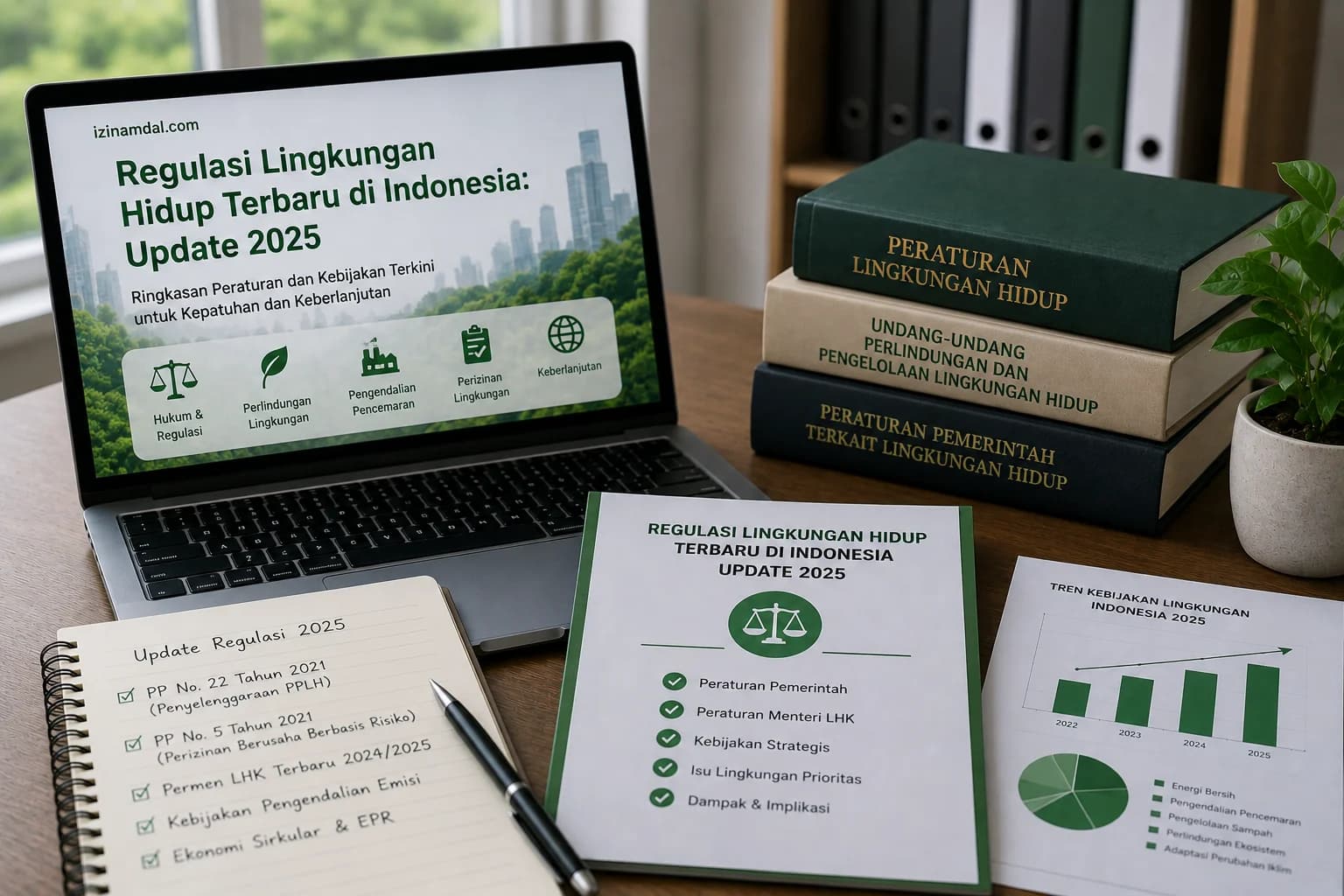
Environmental regulations in Indonesia have undergone significant changes in recent years. For businesses, understanding the latest updates is crucial to ensure legal compliance and avoid sanctions.
This article summarizes the key changes you need to know in 2025.
The Job Creation Law and Its Impact on Environmental Licensing
Law Number 6 of 2023 (replacing Law No. 11/2020 on Job Creation following the Constitutional Court ruling) brought fundamental changes to environmental licensing governance:
Key Changes:
Environmental Approval replaces the previous term "Environmental Permit"
Integration of environmental licensing into the OSS-RBA (Online Single Submission Risk-Based Approach) system
Process simplification with a risk-based approach
Strengthening of local government roles in supervision
Impact on Businesses:
The licensing process becomes more integrated and (ideally) faster
Automatic determination of environmental document types based on risk classification
Mandatory periodic reporting through electronic systems
PP No. 22 of 2021: Latest Implementing Regulation
Government Regulation Number 22 of 2021 on the Implementation of Environmental Protection and Management is the main implementing regulation that governs:
1. Environmental Approval
AMDAL and UKL-UPL serve as the basis for issuing Environmental Approval
The Feasibility Test Team replaces the AMDAL Assessment Commission
AMDAL assessment period is limited to a maximum of 90 working days
2. Environmental Quality Management
Updated environmental quality standards
Integrated wastewater discharge permits
3. B3 Waste Management
Simplified B3 waste classification
New B3 waste management approval mechanisms
4. Supervision and Sanctions
Strengthened supervision mechanisms
Stricter and more progressive administrative sanctions
Minister of Environment Regulation No. 4 of 2021
This Ministerial Regulation establishes the list of planned businesses and/or activities required to have AMDAL, UKL-UPL, or SPPL. Key points:
Grouping of activity types by sector (energy, industry, mining, infrastructure, etc.)
Threshold setting that determines document types
Criteria adjusted to location sensitivity
OSS-RBA System: Licensing Digitalization
The Online Single Submission Risk-Based Approach (OSS-RBA) system serves as a single platform for:
NIB registration and verification
Automatic business risk level determination
Environmental approval applications
Licensing status monitoring
Tips for Using OSS-RBA:
Ensure company data in OSS is complete and accurate
Prepare supporting documents in the appropriate digital format
Monitor notifications and timelines regularly
If you experience technical issues, contact the OSS helpdesk or a consultant
Regulatory Trends to Watch
Some environmental regulatory trends to anticipate:
Carbon Trading & ESG
Carbon trading regulations (PP No. 98/2021) are beginning to be implemented
Increasing ESG reporting demands for companies
Potential incentives for environmentally friendly companies
Circular Economy
Government push towards a circular economy
Reduction of single-use plastic use
Increasingly strict Extended Producer Responsibility (EPR)
Digitalization & Transparency
Electronic environmental reporting (e-reporting)
Public disclosure of environmental information
Use of technology for real-time environmental monitoring
Environmental Violation Sanctions
Businesses that violate environmental provisions can face:
Administrative sanctions: written warnings, government coercion, permit suspension, permit revocation
Administrative fines: up to billions of rupiah
Environmental criminal penalties: based on Law 32/2009, threats of imprisonment and fines for serious violations
Proactive Steps for Businesses
Regular compliance audits — Conduct periodic reviews of environmental documents
Update documents — Adjust documents to the latest regulations if there are activity changes
Timely reporting — Submit semester reports on schedule
Regular consultations — Discuss regulatory changes with consultants
Izin AMDAL always keeps up with the latest regulatory developments. Our team is ready to help you understand and comply with all applicable environmental provisions. Consult your needs now.
Tags
Recent Articles