
If two terms are confused more than any others in hazardous waste, these are the winners: Rintek and Pertek.
They sound alike, both concern hazardous waste, and both come up in the same conversation. But they answer different questions, and choosing the wrong one means preparing a document you do not need while missing the one that is actually mandatory.
The simplest distinguishing question
Is the hazardous waste you handle your own, or someone else's?
From that answer, everything becomes much clearer.
If it is your own waste
Almost every business generates hazardous waste, however small the quantity. Used oil from operational vehicles, spent batteries, used lamps, empty chemical containers, contaminated rags, paint residues.
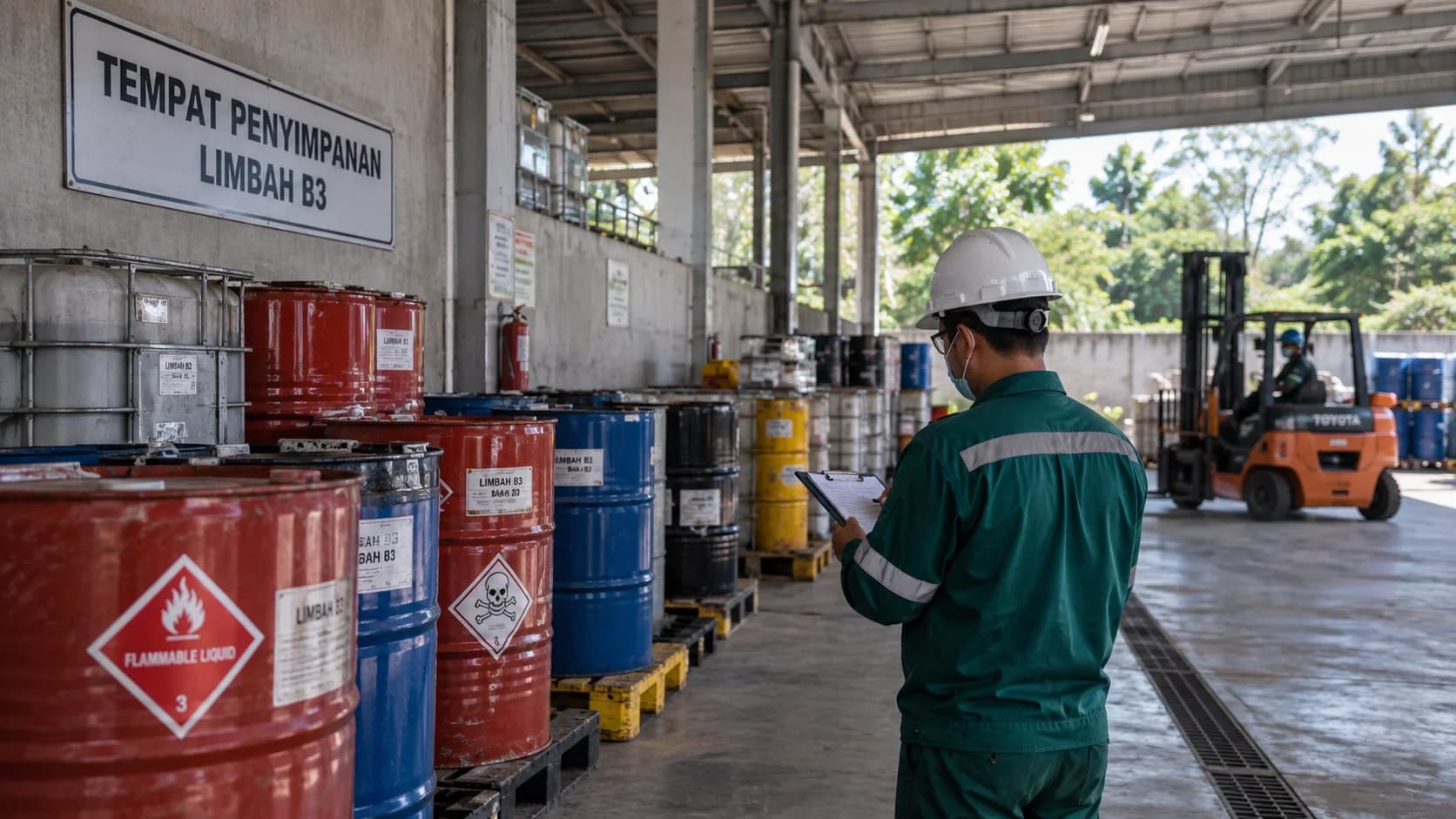
This waste is stored temporarily on your site before being transferred to a licensed third party. For temporary storage of waste you generate yourself, what is required is technical specifications for that storage, forming an inseparable part of your Environmental Approval.
So Rintek is not a standalone document. It sits within your environmental document, is prepared alongside it, and is approved with it.
If it is someone else's waste
If your line of business is collecting, recovering, treating, or disposing of hazardous waste originating from other parties, that is a hazardous waste management business.
For that, what is required is a technical approval for hazardous waste management, followed by an operational feasibility certificate once the facility is built. The requirements are considerably heavier, because you are assuming responsibility for waste you did not generate.
In summary
| Technical specifications (Rintek) | Technical approval (Pertek) | |
|---|---|---|
| For whom | Generators storing their own waste temporarily | Businesses managing others' hazardous waste |
| Document form | Integrated into the Environmental Approval | Standalone, followed by an operational certificate |
| Activities covered | Temporary storage | Collection, recovery, treatment, disposal |
| Weight of process | Relatively light | Heavy, technical, closely supervised |
The most common misconceptions
“We generate very little, so nothing applies.” Quantity affects permitted storage duration, not the existence of the obligation. A workshop producing a few drums of used oil a year still needs compliant storage and still needs records.
“It has been collected, so it is no longer our responsibility.” A generator's responsibility does not simply stop at the gate. If your third party turns out to be unlicensed or fails to manage the waste properly, the generator shares the consequences. Verifying the validity and expiry of a third party's licence is therefore not a formality.
“We sell the waste, so it is a sale rather than management.” Transferring hazardous waste for payment remains subject to hazardous waste management provisions. The recipient must still be licensed.
“We recover the waste ourselves, so no permit is needed.” Recovering hazardous waste, even your own and on your own site, is a recovery activity with its own provisions beyond mere storage.
What a storage facility must have
For most readers, this is the relevant part. Technical requirements include:
An impermeable floor, level, free of cracks.
A roof providing protection from rain and direct sunlight.
Adequate ventilation.
Spill containment, usually a bund or sump.
Symbols and labels matching the waste characteristics.
Physical separation between waste types that must not mix.
Fire extinguishers and emergency response equipment.
Restricted access, not open to anyone.
Continuously updated records of movements in and out.
The last point is the one most often blank during supervision. The building is good, but the logbook was never filled in.
Storage duration
Hazardous waste may not be stored indefinitely. Duration limits vary with waste characteristics and quantities generated, and infectious waste carries a much shorter limit.
Exceeding the storage period is a violation in itself, regardless of whether the waste is eventually transferred correctly. Collection schedules with a third party are therefore best agreed from the start rather than waiting for storage to fill.
The hazardous waste balance
This is what ties everything together: a record of how much waste was generated, how much is in storage, and how much was transferred in a given period.
The figures must reconcile, and any discrepancy must have an explanation. An unbalanced record is the first question during an inspection, because an unexplained gap points to one conclusion nobody wants to face.
How to confirm your position
List every hazardous waste stream your activity generates, estimate monthly quantities, and note where each has been going.
Send that list on WhatsApp. From it we can determine whether technical specifications within your environmental document are sufficient, or whether some activity actually falls under management and requires its own technical approval.