
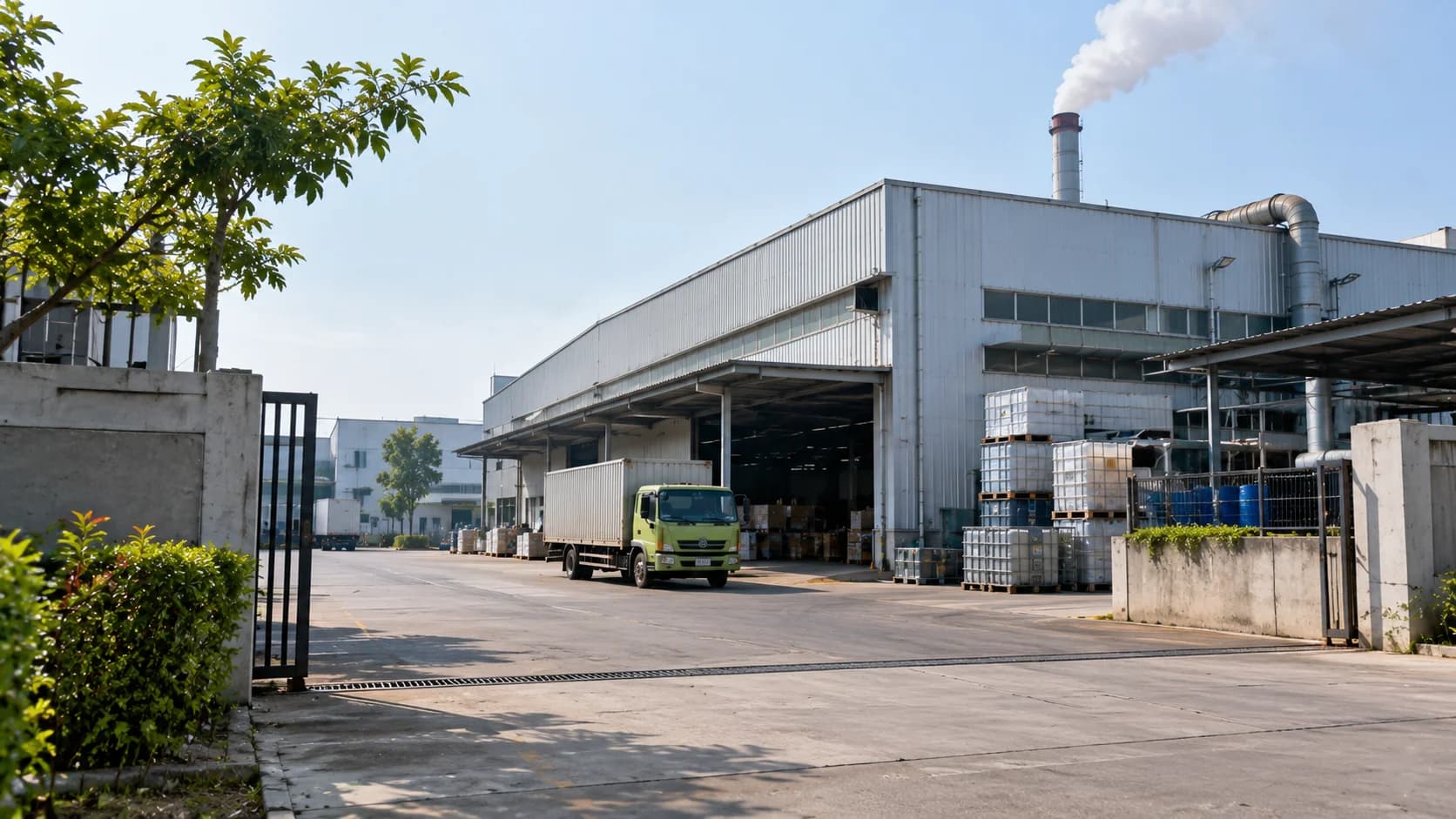
This situation is far more common than anyone likes to admit. The business has run for years, dozens of staff, steady revenue, every business licence in order. Then it emerges that the environmental document never existed.
The backstory is usually similar. The business started small and genuinely was not required to have one. It grew gradually, added machines, extended buildings, and no moment ever arrived where someone stopped to ask whether the obligation had changed. Or the other version: someone handled it years ago, promised it was done, and nobody ever checked.
Why you cannot simply obtain an AMDAL or UKL-UPL now
This is the first question almost everyone asks, and the answer is not bureaucratic obstruction.
AMDAL and UKL-UPL are planning documents. They contain an assessment of the anticipated impacts of an activity that will take place, together with a management plan. They are assessed before the activity begins, so that there is still room to change the design if the impacts are judged too severe.
For an activity already built and operating, that kind of assessment loses its footing. It makes little sense to predict the impact of something whose impact can now simply be measured.
The government therefore provides different instruments: DELH (Environmental Evaluation Document) and DPLH (Environmental Management Document). Both rest on evaluating actual conditions rather than forecasts.
DELH or DPLH, which one
The logic mirrors AMDAL and UKL-UPL:
DELH for activities that, had they been handled from the start, would have fallen under mandatory AMDAL.
DPLH for activities that would have required only a UKL-UPL.
Determination still comes back to screening: type of activity, capacity, area, and location. Only the document form and assessment route differ.
What makes DELH and DPLH harder
There is an assumption that because the activity is already running, the process must be easier. In practice it is often the reverse.
The data must be real data. In an AMDAL, impacts are predicted through modelling. In a DELH, impacts are measured. The wastewater actually leaving the site, the emissions actually occurring, the noise actually audible at the boundary. If the results exceed quality standards, that cannot be hidden, and remediation becomes part of your obligations.
Sanctions must be settled first. Preparing a DELH does not erase the fact that the activity operated without an Environmental Approval. Settling administrative sanctions is generally a prerequisite, and the amount is calculated as a percentage of investment value.
Existing conditions often cannot be changed. If it turns out the building sits closer to a river buffer zone than permitted, at the planning stage that is a matter of moving a line on a drawing. Once the building stands, the options are far narrower and far more expensive.
The stages usually involved
Mapping actual conditions. What genuinely operates on site, at what capacity, producing what. Based on conditions today, not on old documents.
Screening. To determine whether DELH or DPLH applies.
Settlement of administrative sanctions. Coordinating with the environmental agency to establish their form and amount.
Measurement and data collection. Laboratory testing for parameters relevant to your activity.
Document preparation and evaluation. Including a remediation plan for anything not yet compliant.
Assessment and issuance of approval.
Total time depends on the complexity of the activity and on stage three, which is the hardest to forecast because it involves a process outside your control.
Why coming forward early is always better
There is a marked difference between a company that comes forward on its own and one that moves only after being visited.
A company that comes forward still controls its timeline, can still propose a phased remediation plan matched to its finances, and demonstrates good faith clearly. One that moves after a finding faces deadlines set by someone else, with far less room to negotiate.
There is also a factor rarely discussed: fines accrue over time. Every month of delay is not a neutral month.
If you are weighing simply leaving it
The thought is understandable, particularly for a business that has been fine so far. But several things have changed that alter the calculation.
Supervision is now data-driven. A mismatch between the classification codes on your NIB and the environmental documents on record is visible without anyone attending your site. The Environmental Approval is attached to the NIB, so sanctions hit operations directly rather than only the balance sheet.
And one situation forces companies to move more often than any other: wanting to add capacity, applying for bank financing, or entering the supply chain of a large corporate buyer that requires environmental due diligence. At that point, the absence of documents shifts from a risk to a hard blocker.
The cheapest first step
Before deciding anything, the sensible move is to map your position: which category your activity should fall under, which document applies, and roughly how large the consequences are.
That mapping costs nothing and commits you to nothing. Send your activity type, how long it has been operating, and its approximate scale on WhatsApp. The conversation is confidential.
Many companies delay for years because they imagine the number is far larger than it is. Some turn out to need only a DPLH, at a cost well below what they had feared all along.